Introduction to Central Rift Valley Kenya
Amazing Central Rift Valley Kenya Travel Guide is one of the country’s most diverse and accessible travel regions, combining dramatic volcanic landscapes, freshwater and alkaline lakes, wildlife-rich national parks, conservancies, forests, archaeological sites, geothermal attractions, hiking destinations and some of the most spectacular scenery in the Great Rift Valley Kenya.
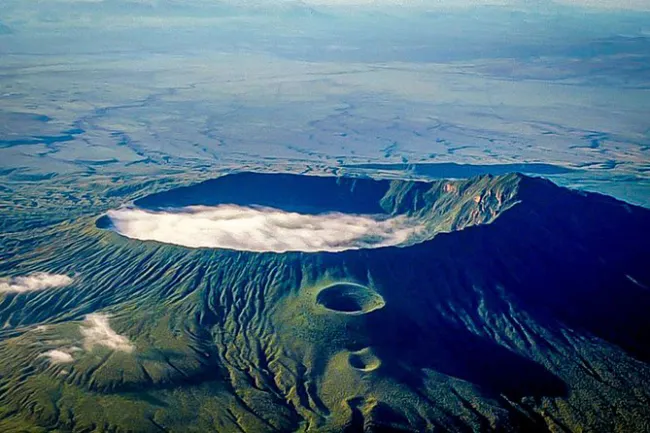
The region stretches broadly around Lake Naivasha, Hell’s Gate, Mount Longonot, Lake Elementaita and Lake Nakuru, with additional attractions extending toward Soysambu Conservancy, Gilgil, Kariandusi, Menengai Crater, Hyrax Hill, Eburru Forest and Nakuru. These destinations are closely connected ecologically as well as geographically. KWS research identifies wildlife movement and dispersal connections between Lake Naivasha, Hell’s Gate, Mount Longonot, Lake Elementaita, Soysambu, Eburru and Lake Nakuru.
This makes the area much more than a collection of individual attractions. It can be experienced as a complete Central Rift Valley safari and adventure circuit, with each destination providing something different.
A traveller can begin with a relaxing Lake Naivasha boat ride, spend another day cycling through Hell’s Gate National Park, hike Mount Longonot, explore the bird-rich shores of Lake Elementaita, experience wildlife in Soysambu Conservancy, and finish with a Lake Nakuru safari searching for rhinos, lions and other wildlife.
For Crystal Tours Kenya, this region is particularly useful because it can work as a weekend escape from Nairobi, a family holiday, a wildlife safari, an adventure trip or as part of a longer route toward the Maasai Mara.
Understanding the Central Rift Valley Region
The best way to understand this destination is to divide it into several connected areas.
Lake Naivasha is the freshwater and relaxation centre of the region, known for boat rides, hippos, birds, Crescent Island and lakeside resorts.
Hell’s Gate National Park is the adventure centre, famous for hiking, cycling, cliffs, gorges, rock climbing and geothermal landscapes. KWS describes it as a destination combining adventure, wellness, dramatic geological formations and outdoor activities.
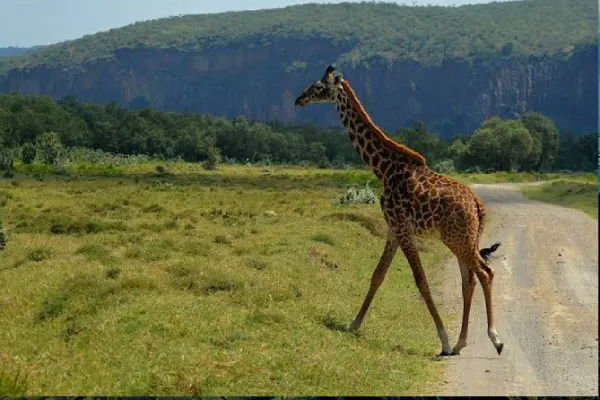
Mount Longonot National Park provides one of Kenya’s most accessible volcanic hiking experiences, with trails leading toward the crater rim and panoramic Rift Valley views.
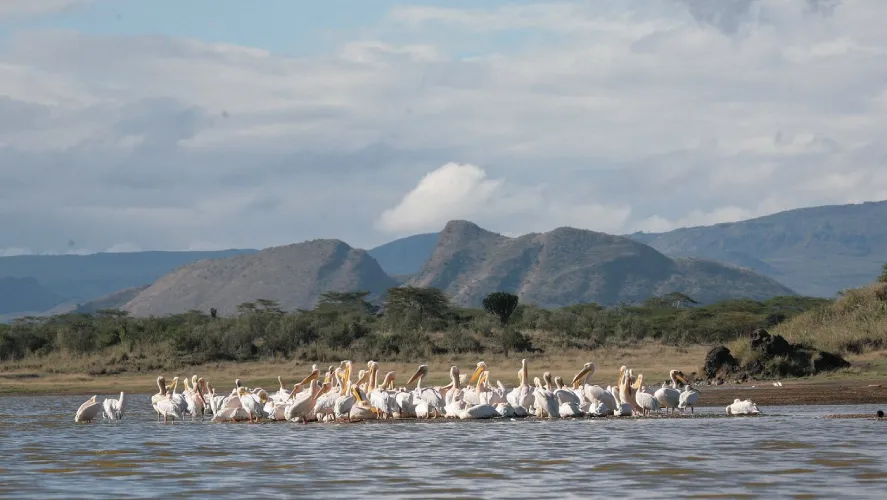
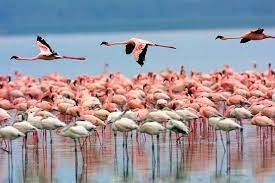
Lake Elementaita is the birdwatching and scenic conservation destination, with flamingos, pelicans, other waterbirds, wildlife and important archaeological history. KWS identifies the lake as an Important Bird Area and Ramsar site.
Soysambu Conservancy adds a private conservation and wildlife experience between Elementaita and Nakuru.
Lake Nakuru National Park is the principal wildlife destination, particularly famous for rhino conservation, birdlife and scenic game drives.
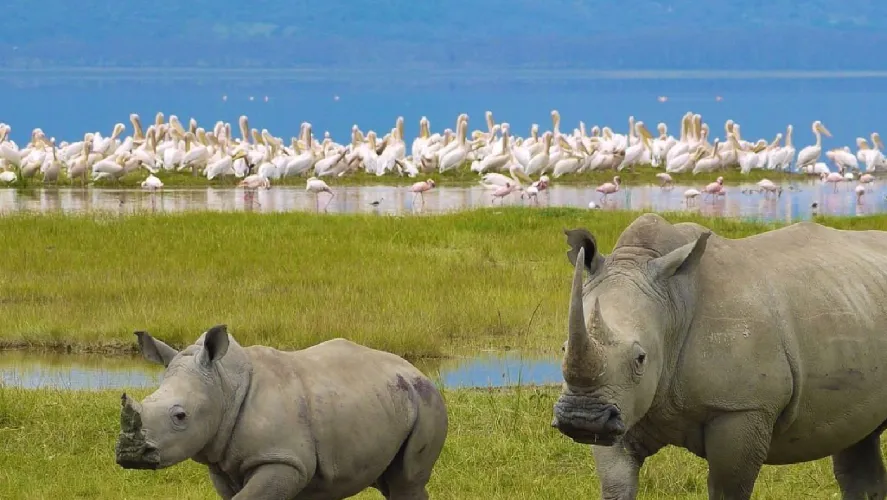
The wider region also includes Menengai Crater, Kariandusi Prehistoric Site, Hyrax Hill, Eburru Forest, Lake Oloidien, Crater Lake and Naivasha town, creating enough experiences for a multi-day holiday.
Lake Naivasha
Lake Naivasha is one of the best places to begin exploring the Central Rift Valley.
Unlike the more alkaline lakes in the region, Lake Naivasha is a freshwater lake surrounded by green landscapes, acacia woodland, farms, flower-growing areas and wildlife habitats. The lake and its surrounding ecosystem support hippos, fish, waterbirds and numerous other species.
One of the most popular experiences is a Lake Naivasha boat ride. A boat excursion provides the opportunity to see hippos in the water, observe African fish eagles and other birds, photograph the lake’s landscapes and explore areas that are difficult to appreciate from land.
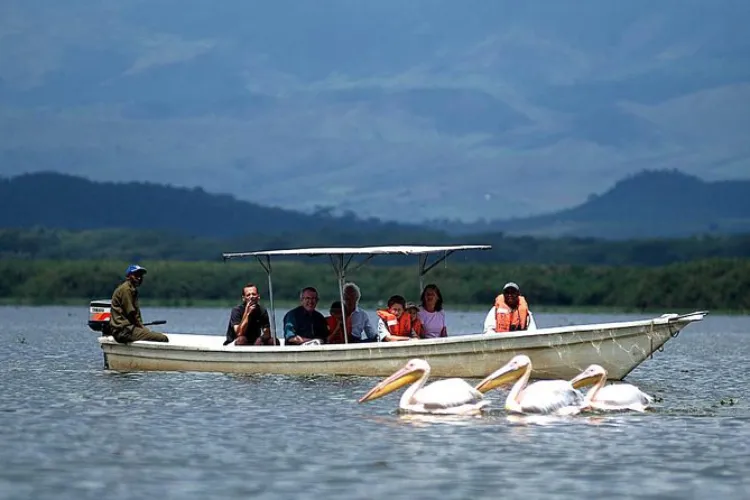
The lake is particularly appealing to families and couples because it provides a slower experience compared with a conventional game-drive safari. A visitor can spend a morning on the water, have lunch at a lakeside property and then continue to another attraction such as Crescent Island or Hell’s Gate.
The surrounding area also offers fishing, birdwatching, cycling, horse riding, walking and photography. Sunset experiences are especially attractive because the combination of water, mountains and changing light creates some of the region’s best photographic scenery.
Crescent Island
Crescent Island is one of the most distinctive attractions around Lake Naivasha because it offers a walking wildlife experience.
Visitors can explore the island on foot while surrounded by animals such as giraffes, zebras, wildebeest and other plains species. The absence of the traditional safari vehicle creates a more intimate experience and makes Crescent Island particularly popular with families, photographers and travellers looking for something different.
It works exceptionally well when combined with a Lake Naivasha boat ride. Travellers can arrive by boat and then continue their wildlife experience on foot, creating a full day centred around the lake.
Lake Oloidien
Lake Oloidien lies near Lake Naivasha and provides a quieter alternative for travellers who want to explore the broader lake ecosystem.
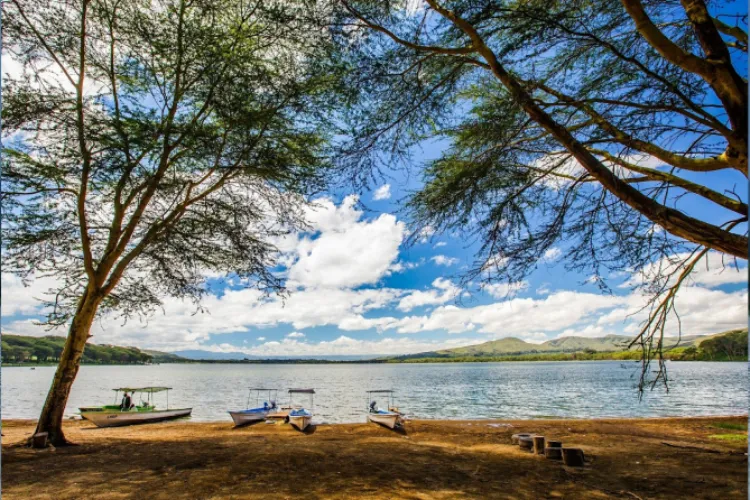
Its surroundings are scenic and less dominated by the main Naivasha tourism circuit. Birdwatching, fishing, photography and peaceful lakeside experiences are among the reasons to include the area.
Lake Oloidien is particularly useful for travellers staying several nights around Naivasha because it allows them to explore beyond the main tourist attractions.
Crater Lake Game Sanctuary
Crater Lake Game Sanctuary provides another smaller-scale wildlife and nature experience in the Naivasha area.
The sanctuary is built around a volcanic crater lake and offers opportunities for walking, birdwatching and wildlife observation. It is a good alternative for visitors who want a quieter experience than the larger national parks.
The attraction also adds geological variety to a Naivasha itinerary because travellers can see how volcanic activity has shaped the Rift Valley landscape.
Hell’s Gate National Park
Hell’s Gate National Park is one of the most unusual national parks in Kenya.
Instead of being primarily a vehicle-based safari destination, Hell’s Gate is known for active outdoor experiences. KWS highlights its towering cliffs, gorges, Fischer’s Tower, Obsidian Caves, geothermal features, hiking and cycling trails.
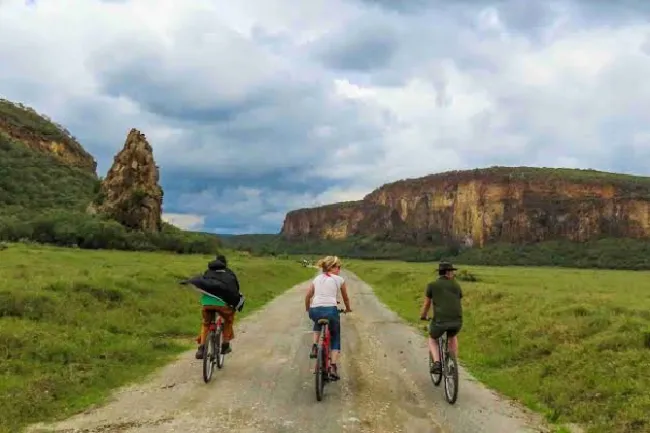
The open terrain makes it possible to experience the landscape much more directly than in many traditional safari parks. Visitors can hike through dramatic formations, cycle along park roads, observe wildlife and explore the geological character of the Rift Valley.
The park’s cliffs and volcanic formations also make it a major photography destination.
Cycling at Hell’s Gate
Hell’s Gate cycling has become one of the region’s signature experiences.
Cycling through the park allows visitors to experience the scenery at a much slower pace than travelling in a safari vehicle. Zebras, giraffes, buffaloes and other wildlife may be encountered along the route, although visitors must follow park safety instructions because wild animals are present.
Cycling is particularly popular with younger travellers, families with older children, adventure groups and fitness travellers.
Hiking and Gorges at Hell’s Gate
The park’s hiking experiences are centred around its dramatic geological formations.
The cliffs, narrow gorges and volcanic landscape create an environment that feels very different from the open savannahs of the Maasai Mara.
The gorges should be approached responsibly because conditions can change, especially during rainfall. Visitors should follow current park guidance and use qualified guides where appropriate.
Rock Climbing
Fischer’s Tower is one of Hell’s Gate’s best-known geological landmarks and a popular location for rock climbing.
This gives adventure travellers another reason to visit the park beyond cycling and wildlife.
The combination of climbing, hiking, wildlife and volcanic scenery makes Hell’s Gate one of the most complete adventure destinations in the Kenyan Rift Valley.
Olkaria Geothermal Area
The Olkaria geothermal area provides another unusual experience.
The region demonstrates the geological activity beneath the Rift Valley through geothermal steam and hot-water features. KWS also identifies the Olkaria Geothermal Spa among the attractions associated with Hell’s Gate.
This creates an interesting combination where visitors can spend the day hiking or cycling and later enjoy a geothermal wellness experience.
Mount Longonot National Park
Mount Longonot National Park is another essential destination in the Central Rift Valley.
Mount Longonot is a volcanic mountain characterised by steep slopes, ridges and a large crater. KWS describes its name as being derived from the Maasai word Oloonong’ot, associated with a mountain of spurs or ridges. The park was gazetted in 1983 and covers approximately 52 square kilometres.
The major attraction is the hike toward the crater rim.
From the higher sections, hikers can look across the Rift Valley and surrounding landscapes, making the experience as much about scenery as physical adventure.
Mount Longonot Hiking
The Mount Longonot hike is particularly suitable for travellers who want an active day trip from Nairobi or Naivasha.
The trail can be physically demanding because of the steep terrain and elevation gain, so visitors should carry enough drinking water, wear suitable footwear and allow adequate time.
The experience is ideal for adventure travellers, hiking groups, students, fitness enthusiasts and travellers who want to add physical activity to a safari.
Lake Elementaita
Lake Elementaita is one of the most important destinations in the Central Rift Valley and should receive significant attention in the pillar page.
The lake is a shallow alkaline lake surrounded by dramatic escarpments and open Rift Valley landscapes. Its birdlife is one of its greatest attractions.
KWS identifies Greater and Lesser Flamingos, Great White Pelicans, African Spoonbills and Pied Avocets among the important waterbirds associated with the lake. It is also a major breeding site for Great White Pelicans and has both Important Bird Area and Ramsar status.
The lake is therefore particularly attractive to birdwatchers and photographers.
Lake Elementaita Wildlife
Although birds are the major attraction, Lake Elementaita is not simply a birdwatching destination.
The wider sanctuary supports terrestrial wildlife, while the surrounding conservancies and ranches provide additional habitat for species such as zebra, giraffe and antelope.
The combination of lake, wildlife and surrounding hills makes Elementaita a more peaceful alternative to some of the busier safari destinations.
Lake Elementaita Hot Springs
The lake ecosystem also contains permanent hot-water springs.
KWS notes that these springs provide breeding habitat for tilapia, which in turn supports the area’s birdlife.
This provides an excellent example of how geological features, aquatic life and bird populations are connected within the Rift Valley ecosystem.
Soysambu Conservancy
Soysambu Conservancy is one of the most important conservation areas around Lake Elementaita.
The conservancy helps connect the wider wildlife landscapes between Elementaita and Lake Nakuru and provides an important habitat for wildlife outside the national parks.
It is particularly suitable for travellers interested in rhino conservation, wildlife photography, walking, birdwatching and more private conservation experiences.
Soysambu also helps visitors understand an important reality of modern Kenyan conservation: wildlife does not exist only inside national park boundaries. The wider landscape and wildlife corridors connecting different protected areas are extremely important.
Kariandusi Prehistoric Site
Kariandusi Prehistoric Site adds an entirely different dimension to the Elementaita region.
The site is important for archaeology and human evolution. KWS notes that excavations at Kariandusi revealed Oldowan stone tools dating back approximately 700,000 years.
This makes the Lake Elementaita area valuable not only for wildlife enthusiasts but also for travellers interested in archaeology, anthropology and the history of early human activity.
The site works particularly well as a short cultural stop while travelling between Naivasha and Nakuru.
Eburru Forest
Eburru Forest provides a dramatic contrast to the dry and open landscapes surrounding the Rift Valley lakes.
The forested highlands offer cooler conditions, mountain scenery, birdlife and opportunities for nature walks.
For travellers spending several days in the region, Eburru can provide a completely different ecosystem within the same itinerary.
It is especially attractive to birdwatchers, hikers, photographers and travellers interested in Kenya’s highland forests.
Lake Nakuru National Park
Lake Nakuru National Park is the major wildlife destination on the northern side of this circuit.
The park is particularly famous for its rhinos. KWS describes it as a flagship sanctuary for endangered black and white rhinos, while also highlighting its rich birdlife and diverse wildlife habitats.
A Lake Nakuru safari can produce sightings of rhinos, buffaloes, giraffes, lions, leopards, zebras and numerous bird species.
The park’s combination of lake, woodland, grassland and escarpment creates a highly varied safari environment.
Rhino Conservation at Lake Nakuru
One of the most important reasons to visit Lake Nakuru National Park is its role in rhino conservation.
Both black and white rhinos can be encountered within the park, making it one of Kenya’s important destinations for travellers specifically interested in rhino conservation.
This is also a good opportunity for Crystal Tours Kenya to explain responsible wildlife viewing, because maintaining a respectful distance and following park rules helps protect these endangered animals.
Birdwatching at Lake Nakuru
Lake Nakuru has historically been famous for huge concentrations of flamingos, although bird numbers naturally fluctuate according to water conditions, food availability and lake ecology.
The broader park ecosystem supports many other bird species, making it a worthwhile destination even when flamingo concentrations are lower.
Birdwatchers can combine Nakuru with Elementaita and Naivasha to experience several different wetland environments in one trip.
Baboon Cliff
Baboon Cliff provides one of the most impressive viewpoints over Lake Nakuru.
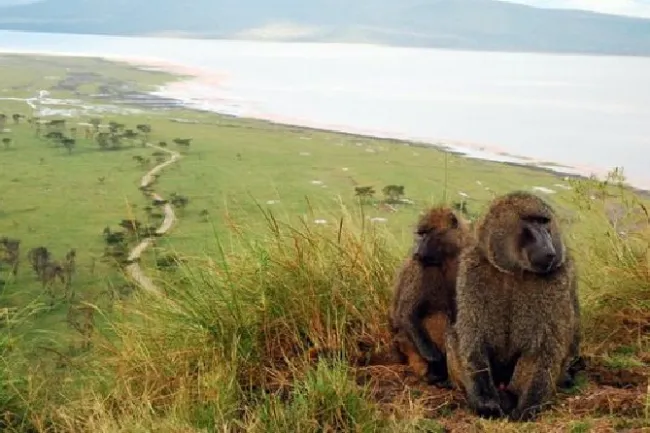
From above, visitors can appreciate the scale of the lake and surrounding park while watching wildlife across the landscape.
It is particularly useful for photographers because the elevated perspective gives a much broader view than ground-level game drives.
Makalia Falls
Makalia Falls is another scenic feature within the Lake Nakuru area.
Its appearance varies depending on rainfall and water flow, but when conditions are favourable it provides an attractive combination of rock, vegetation and flowing water.
It is a useful addition to a game drive because it demonstrates that Lake Nakuru is more than just a lake and wildlife destination.
Menengai Crater
Menengai Crater is one of the major geological attractions around Nakuru.
The enormous volcanic formation provides dramatic views across the Rift Valley and is suitable for hiking, sightseeing and photography.
Its volcanic character complements the other geological attractions around Naivasha, Hell’s Gate and Mount Longonot.
Hyrax Hill Prehistoric Site
Hyrax Hill Prehistoric Site provides another opportunity to explore Kenya’s archaeological heritage.
Located near Nakuru, the site gives travellers a chance to learn about prehistoric settlement and archaeological discoveries while also enjoying views over the surrounding landscape.
It is particularly easy to incorporate into an itinerary that includes Nakuru town.
Nakuru Town
Nakuru is the commercial centre of this part of the Rift Valley.
Although it is not itself a traditional safari attraction, it is important for travellers because it provides a large selection of accommodation, restaurants, supermarkets, banks, shops and other services.
Nakuru can therefore be used as a practical base for travellers exploring Lake Nakuru National Park, Menengai Crater, Hyrax Hill and surrounding attractions.
Gilgil
Gilgil occupies an important position between Naivasha, Elementaita and Nakuru.
It can serve as a useful overnight or transit point for travellers moving through the Central Rift Valley.
The surrounding landscape is also part of the broader wildlife and agricultural landscape that connects the major destinations.
Great Rift Valley Viewpoints
The Great Rift Valley itself is an attraction.
Travelling along the Nairobi–Naivasha–Nakuru route provides opportunities to stop at viewpoints overlooking escarpments, volcanic landscapes, valleys and lakes.
These stops are especially useful on road safaris because they break up the journey and provide travellers with a better understanding of the enormous geological system shaping central Kenya.
Hotels and Lodges in the Central Rift Valley
The accommodation options in this region are one of its strongest commercial advantages. Unlike remote safari destinations where accommodation can be limited, Naivasha and Nakuru provide a wide range of hotels, resorts, lodges, camps and luxury properties.
Below is a practical list to use for the website. Accommodation should always be checked for current availability and operating status before publishing a booking recommendation.
Lake Naivasha and Hell’s Gate Area
For luxury and resort travellers, Enashipai Resort & Spa is one of the major Naivasha properties, while Lake Naivasha Sopa Resort offers an established lakeside resort experience. Enashipai Resort & Spa Lake Naivasha Sopa Resort
Other notable accommodation in the Naivasha area includes Lake Naivasha Resort, Naivasha Kongoni Lodge, Naivasha Rocky Eco Lodge (Rocky Resort), Lake Naivasha Simba Lodge, Lake Naivasha Lazarus Lodge and Lake View Resort.
KWS also lists Elsamere Education Centre, Sawela Lodges and Eseriani Hotel & Resort among accommodation options serving visitors to Hell’s Gate.
For travellers looking for a camping-oriented experience, the Naivasha area also has several camps and nature-based properties, making it possible to create anything from an affordable weekend to a high-end lakeside getaway.
Lake Elementaita Area
Around Lake Elementaita, accommodation is more focused on lodges, camps and nature-based properties.
KWS currently lists Pelican Lodge, Sentrim Lake Elementaita Resort, Lake Elementaita Mountain Lodge, Lake Elementaita Nature Pebbles & Spa and Sirville Lake Elementaita Lodge among accommodation options serving the sanctuary.
Lake Elementaita Mountain Lodge is one of the identifiable properties in the area.
For the website, I would categorize the Elementaita accommodation section as luxury lakeside stays, mid-range lodges, nature retreats and camping, rather than simply calling every property a hotel.
Lake Nakuru National Park Area
For travellers wanting to stay close to wildlife, the main options include Sarova Lion Hill Game Lodge, The Cliff Nakuru, Lake Nakuru Lodge and Lake Nakuru Sopa Lodge.
KWS also lists Flamingo Hill Camp among the privately operated accommodation options associated with Lake Nakuru National Park.
These properties are particularly appropriate for travellers whose priority is spending more time inside or close to the national park rather than commuting from Nakuru town.
Nakuru Town Hotels
For travellers prioritizing convenience, restaurants and city facilities, Nakuru town offers a much broader hotel selection.
Options include The Ole-Ken Hotel, Nakuru, Kivu Resort, Ivory Park Hotel – Safari water world and Lanet Matfam Resort.
This category is useful for budget and mid-range travellers, business travellers, families and people using Nakuru as a base for multiple attractions.
Mount Longonot Area
Travellers visiting Mount Longonot National Park can also use accommodation around Naivasha.
KWS lists Sweet Lake Resort and Mt. Longonot Country Lodge among private accommodation options associated with the park.
For a website itinerary, I would generally recommend staying around Naivasha rather than trying to create a separate accommodation market for Mount Longonot.
Best Things to Do in Central Rift Valley Kenya
The region is particularly powerful because it combines several different tourism products.
A visitor can begin with a Lake Naivasha boat safari, where hippos and waterbirds provide the main attraction, and then continue to Crescent Island for a walking wildlife experience.
Another day can be spent cycling through Hell’s Gate National Park, exploring its cliffs and volcanic formations before relaxing at the Olkaria geothermal area.
Adventure travellers can hike Mount Longonot, while birdwatchers can concentrate on Lake Elementaita and Lake Nakuru.
Wildlife enthusiasts can spend a full day inside Lake Nakuru National Park, searching for rhinos, lions, leopards, buffaloes, giraffes and other species.
Travellers interested in history can add Kariandusi Prehistoric Site and Hyrax Hill, while nature enthusiasts can venture toward Eburru Forest.
This is what makes the region so commercially attractive: one destination can sell wildlife, adventure, relaxation, culture, archaeology, birdwatching and wellness.
Best Time to Visit Central Rift Valley Kenya
For travellers wanting to combine wildlife and outdoor activities, January to February and June to October are particularly attractive periods.
These months can provide favourable conditions for game drives, hiking, cycling, photography and general sightseeing.
However, travellers should remember that the lakes and ecosystems change throughout the year. Flamingo numbers, water levels, vegetation and wildlife distribution can fluctuate naturally.
For hiking destinations such as Hell’s Gate and Mount Longonot, weather conditions should always be checked before departure because heavy rainfall can affect trails and gorge safety.
How to Get to Central Rift Valley Kenya
The Central Rift Valley is one of Kenya’s most accessible safari regions.
From Nairobi, travellers follow the main road toward Naivasha and Nakuru, with the journey passing through the dramatic Rift Valley escarpment.
Lake Naivasha is the natural first stop for many itineraries. From there, travellers can reach Hell’s Gate, Crescent Island, Mount Longonot and the surrounding attractions.
Continuing north brings visitors toward Lake Elementaita, followed by Soysambu and Lake Nakuru.
This makes the area ideal for self-drive travellers, private safaris, family road trips and organized tours.
The fact that multiple attractions can be reached within relatively short driving distances is one of the biggest advantages of this region.
How Many Days Should You Spend Here?
A quick 2-day Central Rift Valley trip can focus on Lake Naivasha and Hell’s Gate.
A 3-day trip can add Mount Longonot or Crescent Island.
A 4-day trip can combine Naivasha, Hell’s Gate, Lake Elementaita and Lake Nakuru.
A 5-day itinerary gives enough time for Naivasha, Hell’s Gate, Elementaita, Soysambu and Lake Nakuru without making the trip feel excessively rushed.
Travellers with 6–7 days can slow down and add Menengai Crater, Kariandusi, Hyrax Hill, Eburru Forest and additional cultural or nature experiences.
Central Rift Valley for Families
The region is particularly good for families because it provides activities beyond traditional game drives.
Children can enjoy boat rides on Lake Naivasha, see hippos, observe birds, walk among wildlife on Crescent Island and explore volcanic landscapes.
Older children and teenagers can enjoy cycling at Hell’s Gate and hiking Mount Longonot, while Lake Nakuru provides the classic wildlife experience.
The variety also means families do not have to spend several consecutive days inside a safari vehicle.
Central Rift Valley for Adventure Travellers
Adventure travellers should make Hell’s Gate, Mount Longonot and Menengai Crater priorities.
Hell’s Gate provides cycling, hiking and climbing, while Longonot provides a more demanding volcanic hike.
The geological landscape itself becomes part of the adventure, with cliffs, gorges, craters, volcanic rocks and geothermal activity appearing throughout the region.
Central Rift Valley for Birdwatchers
Birdwatching is one of the region’s strongest but sometimes overlooked tourism products.
Lake Naivasha, Lake Elementaita and Lake Nakuru each provide different wetland habitats.
Elementaita is particularly important because of its internationally recognized bird populations and Ramsar status. KWS highlights flamingos, pelicans, spoonbills and avocets among its important waterbirds.
Combining all three lakes can therefore produce a highly rewarding Central Rift Valley birdwatching circuit.
Central Rift Valley for Wildlife Lovers
For wildlife travellers, the strongest combination is Soysambu + Lake Nakuru + Naivasha/Crescent Island.
Lake Nakuru provides the strongest traditional game-drive experience, particularly for rhinos.
Soysambu provides a conservation landscape outside the national park, while Crescent Island provides a walking experience.
Hell’s Gate complements these destinations by adding wildlife to a primarily adventure-oriented landscape.
Responsible Tourism
Responsible tourism is particularly important in the Central Rift Valley because the region contains sensitive lakes, wildlife corridors, forests, conservancies and densely settled landscapes.
Visitors should avoid littering, respect wildlife distances, remain on designated roads and trails, avoid feeding animals and use established campsites and accommodation.
KWS specifically instructs Lake Elementaita visitors to remain on established roads and trails, maintain wildlife viewing distances, avoid feeding wildlife and carry out their rubbish.
Travellers should also support community-owned tourism businesses, local guides, conservation organizations and properties that contribute to the surrounding communities.
Water conservation is particularly important around the lakes and lodges because the region’s freshwater resources support both people and wildlife.
Central Rift Valley and the Maasai Mara
One of the biggest advantages of this region is that it can easily form part of a longer Kenya safari.
A traveller arriving from Nairobi can explore Lake Naivasha, Hell’s Gate, Lake Elementaita and Lake Nakuru before continuing toward the Maasai Mara.
This creates a very diverse itinerary.
Instead of spending the entire trip doing game drives, visitors experience boating, cycling, hiking, volcanic landscapes, birdwatching, rhino conservation and finally the extensive savannah of the Maasai Mara.
Central Rift Valley and Amboseli
The region can also be connected with Amboseli National Park, particularly for travellers interested in seeing different Kenyan ecosystems.
A longer itinerary can combine the Rift Valley lakes with Amboseli before continuing to other southern Kenya destinations.
Suggested Central Rift Valley Circuits
The Classic 3-Day Circuit
Nairobi → Lake Naivasha → Hell’s Gate → Lake Elementaita → Nairobi
This is ideal for a short weekend or family holiday.
The Wildlife Circuit
Nairobi → Lake Naivasha → Lake Elementaita → Soysambu → Lake Nakuru → Nairobi
This emphasizes lakes, birdlife, conservation and wildlife.
The Adventure Circuit
Nairobi → Mount Longonot → Lake Naivasha → Hell’s Gate → Naivasha
This is ideal for active travellers.
The Complete 5-Day Circuit
Nairobi → Lake Naivasha → Hell’s Gate → Mount Longonot → Lake Elementaita → Soysambu → Lake Nakuru → Nairobi
This gives travellers a much broader experience of the Central Rift Valley.
The Extended Rift Valley Safari
Nairobi → Lake Naivasha → Hell’s Gate → Lake Elementaita → Lake Nakuru → Maasai Mara
This is one of the strongest combinations for an international visitor who wants to combine adventure, lakes and classic wildlife.
Central Rift Valley vs Maasai Mara
The Central Rift Valley should not be marketed as a replacement for the Maasai Mara.
They provide different experiences.
The Maasai Mara is primarily about expansive savannah, predators, the Big Five and the Great Migration.
The Central Rift Valley is about lakes, volcanic landscapes, hiking, cycling, rhinos, birdlife, geothermal experiences, walking safaris and diverse short-distance attractions.
This difference should be made very clear on the Crystal Tours Kenya website.
Central Rift Valley vs Amboseli
The same applies to Amboseli.
Amboseli is particularly famous for elephants, wetlands and views toward Mount Kilimanjaro.
The Central Rift Valley is much more varied geographically, with several lakes, volcanic mountains, forests, geothermal landscapes and multiple wildlife areas.
It is therefore particularly good for travellers who want variety within one region.
Planning Your Central Rift Valley Kenya Trip with Crystal Tours Kenya
The Central Rift Valley Kenya is one of the easiest regions to customize because travellers can choose their experience according to their interests, available time and budget.
A couple looking for a romantic escape can focus on Lake Naivasha, lakeside accommodation, boat rides and scenic experiences.
A family can combine Crescent Island, Hell’s Gate and Lake Nakuru.
Adventure travellers can prioritize Mount Longonot, Hell’s Gate and Menengai Crater.
Wildlife enthusiasts can build their trip around Soysambu and Lake Nakuru.
Birdwatchers can combine Lake Naivasha, Lake Elementaita and Lake Nakuru.
History enthusiasts can add Kariandusi and Hyrax Hill.
For a longer Kenya holiday, Crystal Tours Kenya can combine the Central Rift Valley with the Maasai Mara, Amboseli, Samburu or Kenya’s coast, creating a broader itinerary rather than treating the Rift Valley as an isolated stop.
Conclusion
The Central Rift Valley Kenya is one of the country’s most complete travel regions.
Its strength is not one individual attraction but the extraordinary variety packed into a relatively compact area. Lake Naivasha offers freshwater landscapes, hippos, birdlife and boat rides. Crescent Island provides walking wildlife experiences. Hell’s Gate National Park delivers cycling, hiking, rock climbing and geothermal scenery. Mount Longonot provides volcanic adventure, while Lake Elementaita combines spectacular birdlife, conservation and archaeology. Soysambu Conservancy adds private conservation experiences, while Lake Nakuru National Park delivers some of Kenya’s best rhino and wildlife encounters.
Around these major destinations are Menengai Crater, Hyrax Hill, Kariandusi, Eburru Forest, Lake Oloidien, Crater Lake and Nakuru, giving the region even greater depth.
The result is a destination that can appeal to almost every type of traveller: families, couples, adventure travellers, birdwatchers, photographers, wildlife enthusiasts, hikers, history lovers and luxury travellers.