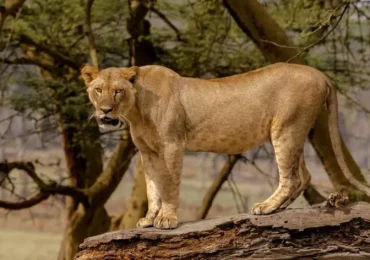
The first rays of sunlight spill across the dusty plains of northern Kenya as the Ewaso Nyiro River winds through an otherwise arid landscape.
Then your guide suddenly slows the vehicle.
Ahead stands an animal unlike any giraffe you’ve ever seen. Its coat appears hand-painted, outlined by crisp white lines that resemble an intricate mosaic.
A few moments later, a zebra crosses the track, yet its stripes are narrower and more elegant than those of the plains zebras commonly seen elsewhere in Kenya.
This is not the Maasai Mara National Reserve.
This is Samburu National Reserve.
And these are the legendary Samburu Special Five.
For many travelers planning a Kenya safari, the Big Five dominate bucket lists. Lions, elephants, rhinos, buffaloes, and leopards understandably receive much of the attention. Yet seasoned safari enthusiasts know that some of Kenya’s most fascinating wildlife lives far from the southern savannahs.
Found primarily in the rugged landscapes of Northern Kenya, the Samburu Special Five are a collection of rare and remarkable species that have adapted to survive in one of East Africa’s most challenging environments.
Spotting all five is considered one of the most rewarding wildlife experiences on a Samburu National Reserve safari.
More importantly, these animals tell a deeper story about evolution, resilience, conservation, and the extraordinary biodiversity that makes Kenya one of Africa’s premier safari destinations.
Understanding the Samburu Special Five
Unlike the Big Five, which were originally categorized by hunters according to the difficulty of hunting them on foot, the Samburu Special Five represent a unique ecological identity.
These animals are specially adapted to the semi-arid ecosystems of northern Kenya and are rarely found in other safari regions.
The Samburu Special Five include:
- Grevy’s Zebra
- Reticulated Giraffe
- Gerenuk
- Beisa Oryx
- Somali Ostrich
Together, they symbolize the unique wildlife heritage of the Samburu ecosystem and have become one of the main reasons travelers choose a Northern Kenya safari.
While predators and elephants certainly thrive here, many visitors leave Samburu talking most about these extraordinary species because they offer encounters unavailable in many other African safari destinations.
The Samburu Special Five Animals
Many travelers arrive expecting lions and elephants. They leave talking about creatures they had never even heard of before.
Samburu National Reserve is world-famous for the Samburu Special Five, a collection of rare northern species adapted perfectly to this harsh environment.
1. The Elegant Grevy’s Zebra
Unlike the common plains zebra, the Grevy’s zebra looks refined and almost royal. Its narrow stripes, oversized ears, and white belly make it instantly recognizable.
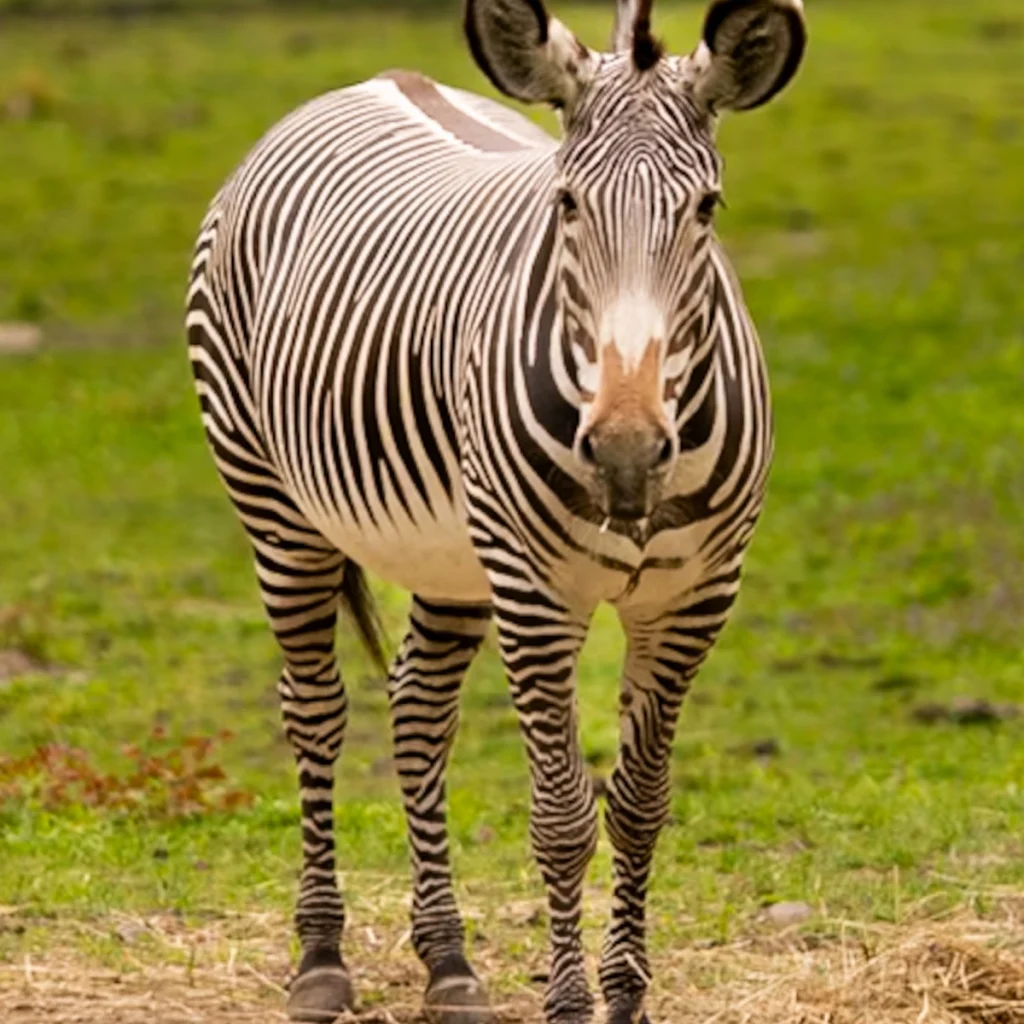
Grevy’s zebras are endangered, with population declines driven by habitat loss, competition with livestock, and human-wildlife conflict and Samburu remains one of the best places in Africa to see them thriving in the wild.
It is also the largest wild zebra species in the world and are adapted perfectly to survive in harsh environments where water and grazing are scarce.
They are generally less social than plains zebras, with looser group structures and more fluid associations, although mothers and foals maintain strong bonds.
Watching a herd gather near the river at sunrise feels like witnessing another era of Africa.
Grevy’s zebras are highly dependent on water sources, often traveling long distances to reach rivers like the Ewaso Nyiro, which makes sightings in Samburu especially memorable as herds gather along the riverbanks during dry seasons.
Seeing a Grevy’s zebra in the wild is often described as a highlight of a Samburu safari, not only because of its striking beauty but also because it represents one of Africa’s most unique and fragile wildlife success stories still unfolding today.
2. The Reticulated Giraffe
The reticulated giraffe may be the most photogenic animal in Samburu National Reserve. It is one of the most visually striking and iconic species in northern Kenya, where it roams the dry savannah and acacia-dotted landscapes with quiet elegance.
Adapted to semi-arid environments, it feeds on acacia leaves using its long, prehensile tongue and towering neck, allowing it to reach vegetation that most herbivores cannot access, which reduces direct competition for food.
These giraffes are generally more solitary or found in small groups compared to other herd animals, although they may gather in larger numbers near reliable water sources like the Ewaso Nyiro River during dry seasons.
Wildlife photographers often spend hours following them through the golden light.
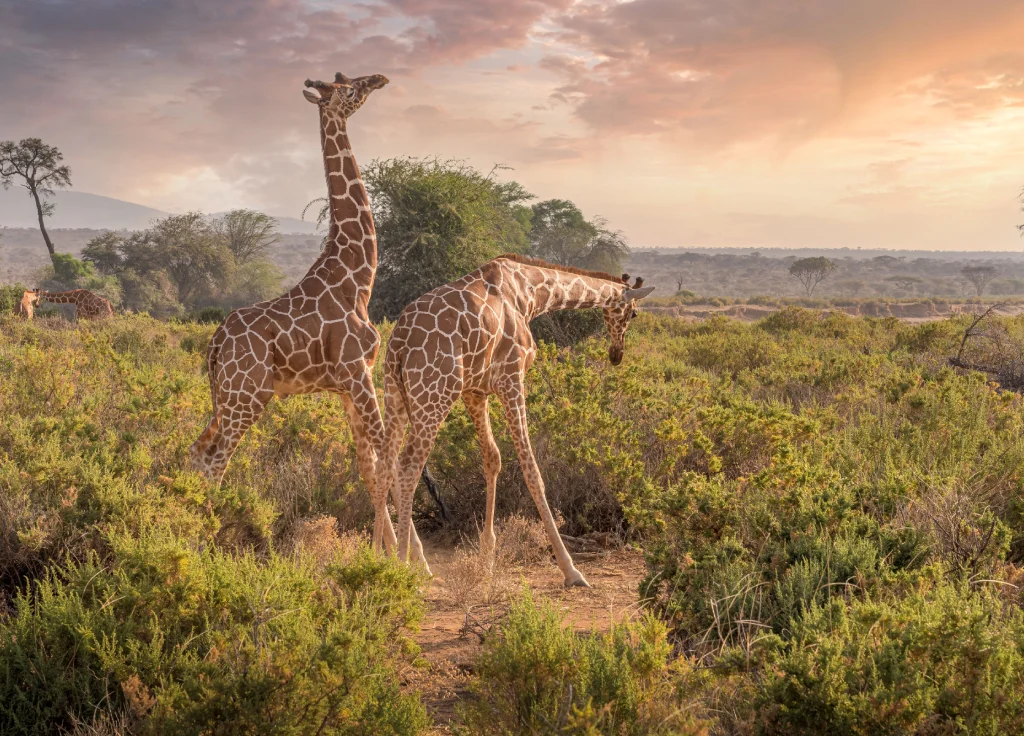
Their calm, slow movements across the open Samburu landscape create some of the most memorable safari scenes, especially during sunrise and sunset when the golden light enhances their unique markings.
Unfortunately, habitat fragmentation and human expansion have impacted their populations, making conservation efforts in northern Kenya vital for their survival.
For many visitors, seeing a reticulated giraffe gracefully walking across the Samburu plains is not just a wildlife sighting but a defining moment of their entire safari experience.
3. The Beisa Oryx
The Beisa oryx is one of the most resilient and visually striking antelopes found in the arid landscapes of northern Kenya and looks almost mythical.
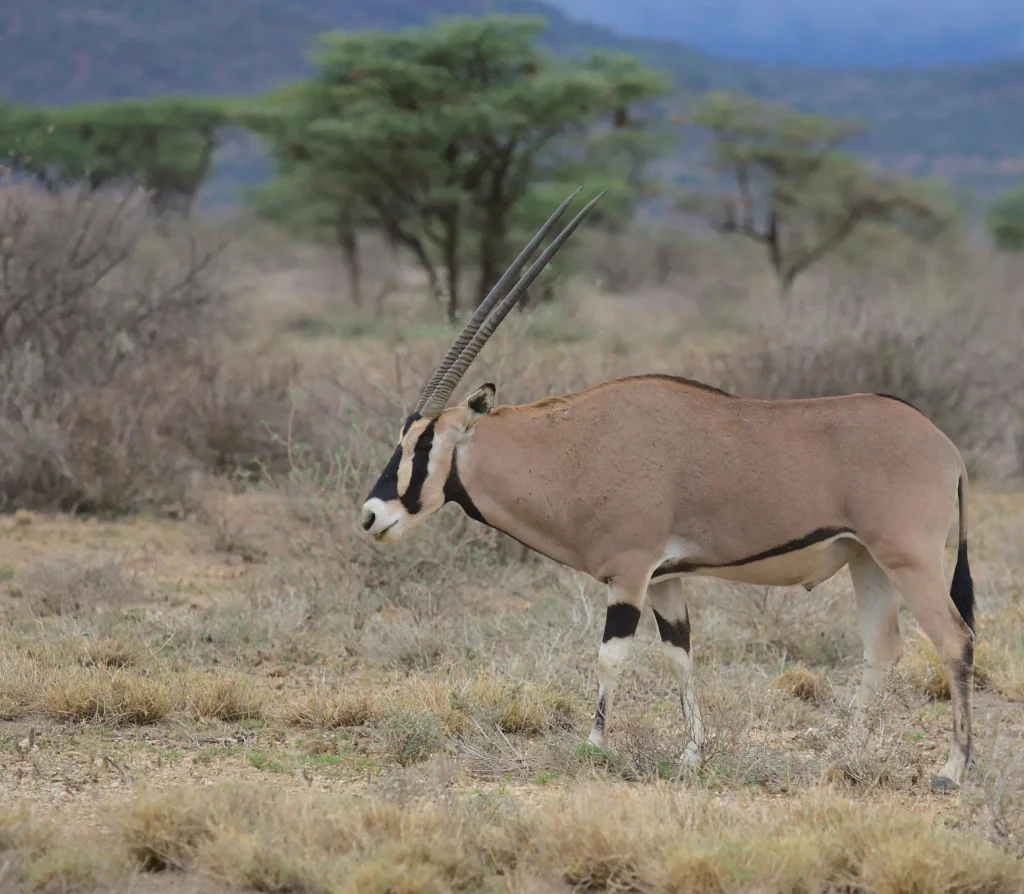
Recognized by its sleek greyish-brown body, bold black facial markings, and long, straight spear-like horns, the Beisa oryx is perfectly adapted for survival in semi-desert environments.
It has an incredible ability to regulate its body temperature, allowing it to withstand extreme heat while conserving moisture, and it can survive for long periods without drinking water by extracting moisture from the vegetation it consumes.
Typically found in small herds or family groups, the oryx is both alert and cautious, relying on keen eyesight and coordinated group behavior to detect predators such as lions and hyenas.
When threatened, it can run at high speeds and use its sharp horns defensively, making it one of the more formidable antelope species in the region.
In Samburu, sightings of Beisa oryx often occur across open plains and near dry riverbeds, where their striking silhouette contrasts beautifully against the golden northern Kenya landscape.
4. The Gerenuk: The Giraffe Gazelle
Perhaps the strangest animal in Samburu is the gerenuk.
Nicknamed the “giraffe gazelle,” this elegant antelope frequently stands upright on its hind legs to feed from trees.
Watching one balance effortlessly while stretching into the branches feels almost surreal.
This unique feeding behavior gives it a major survival advantage in harsh environments where food is often scarce and scattered
Unlike many other antelope species, gerenuks are typically seen alone or in small groups rather than large herds, moving quietly through the bush with a calm, almost delicate presence.
Their large eyes and alert posture help them detect predators early, and they rely on speed and agility to escape danger when necessary.
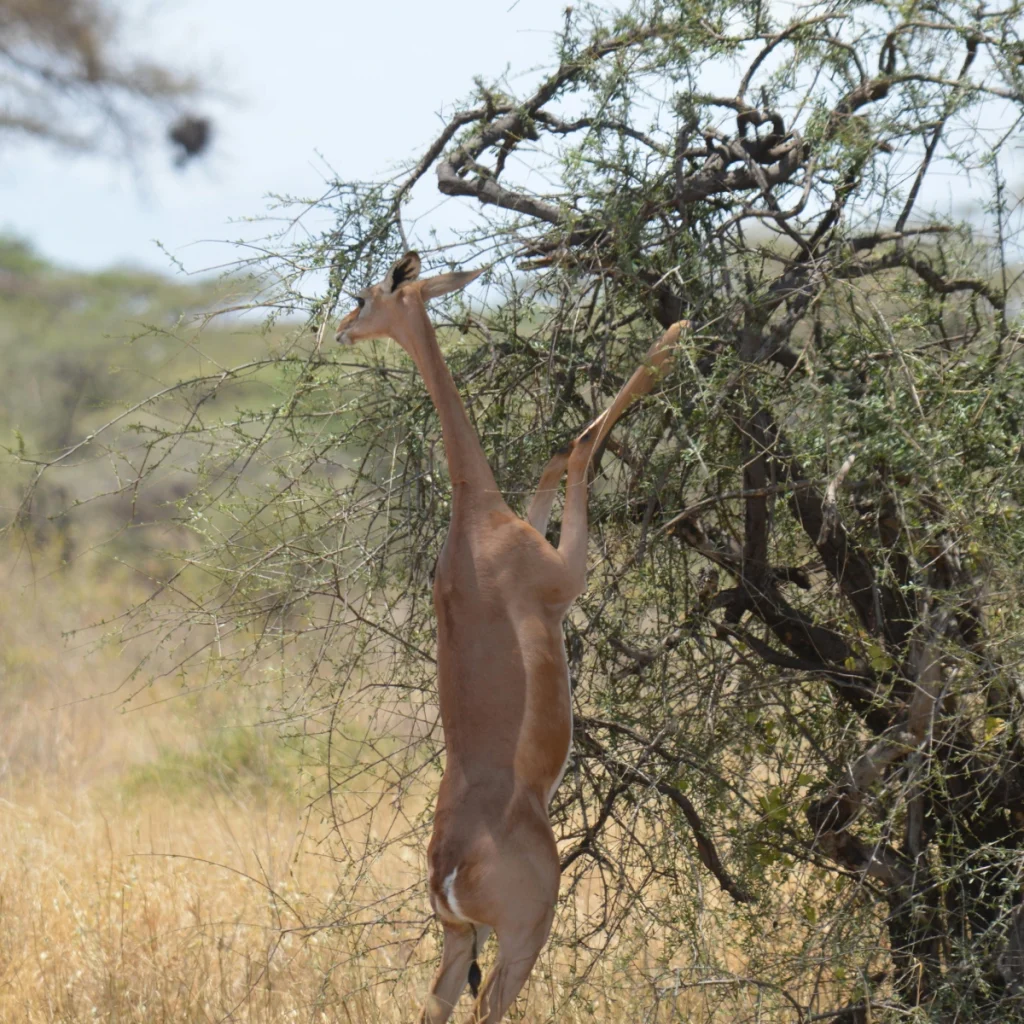
In Samburu, sightings often happen in the early morning or late afternoon when they emerge to feed on acacia shrubs, creating some of the most fascinating and photogenic moments for safari visitors.
5. The Somali Ostrich
One of the most distinctive and striking birds found in the arid and semi-arid landscapes of northern Kenya.
Unlike the more common Maasai ostrich, the Somali ostrich is easily identified by its blue-grey neck and legs, especially in males, giving it a more vivid and almost otherworldly appearance.
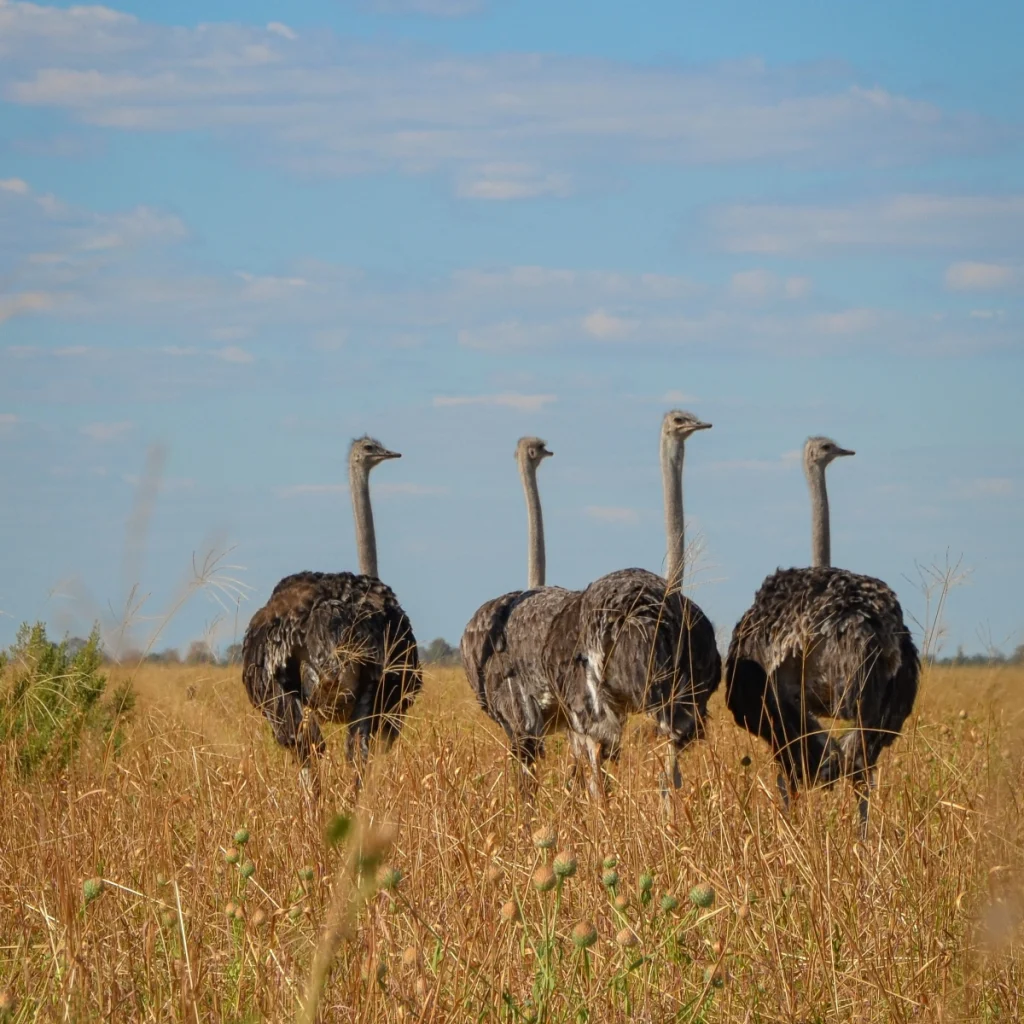
It is well adapted to harsh environments, capable of surviving long periods without direct water intake by obtaining moisture from plants and seeds.
It is primarily a ground-dwelling bird, feeding on a varied diet of grasses, fruits, and insects, and relies on its powerful legs not only for swift running but also for defense against predators such as lions and hyenas.
In Samburu, sightings often occur in open plains where these birds move with surprising elegance despite their large size, sometimes seen alone or in small groups as they forage across the savannah.
Encountering the Somali ostrich is a memorable experience because it represents the raw beauty.
Why the Samburu Special Five Matter More Than Ever
It is easy to admire the Samburu Special Five for their beauty. Their unusual appearances, fascinating behaviors, and rarity make them some of the most sought-after animals on a Kenya safari.
However, their true importance extends far beyond tourism.
Each species plays a critical role in maintaining the delicate balance of the Samburu ecosystem.
Reticulated giraffes shape vegetation by browsing treetops, preventing certain plant species from becoming dominant. Grevy’s zebras influence grassland dynamics through selective grazing.
Beisa oryx help disperse seeds across vast areas, while gerenuks browse shrubs that many other herbivores cannot reach. Even the Somali ostrich contributes to ecosystem health through seed dispersal and nutrient cycling.
Together, these animals support biodiversity in ways that scientists are still working to fully understand.
Their survival also serves as an indicator of environmental health. When populations of these specialized species decline, it often signals broader ecological challenges such as habitat degradation, drought pressure, or human encroachment.
Protecting the Samburu Special Five therefore means protecting entire ecosystems that support countless other species, including local communities that depend on healthy landscapes.
The Deep Connection Between the Samburu People and Wildlife
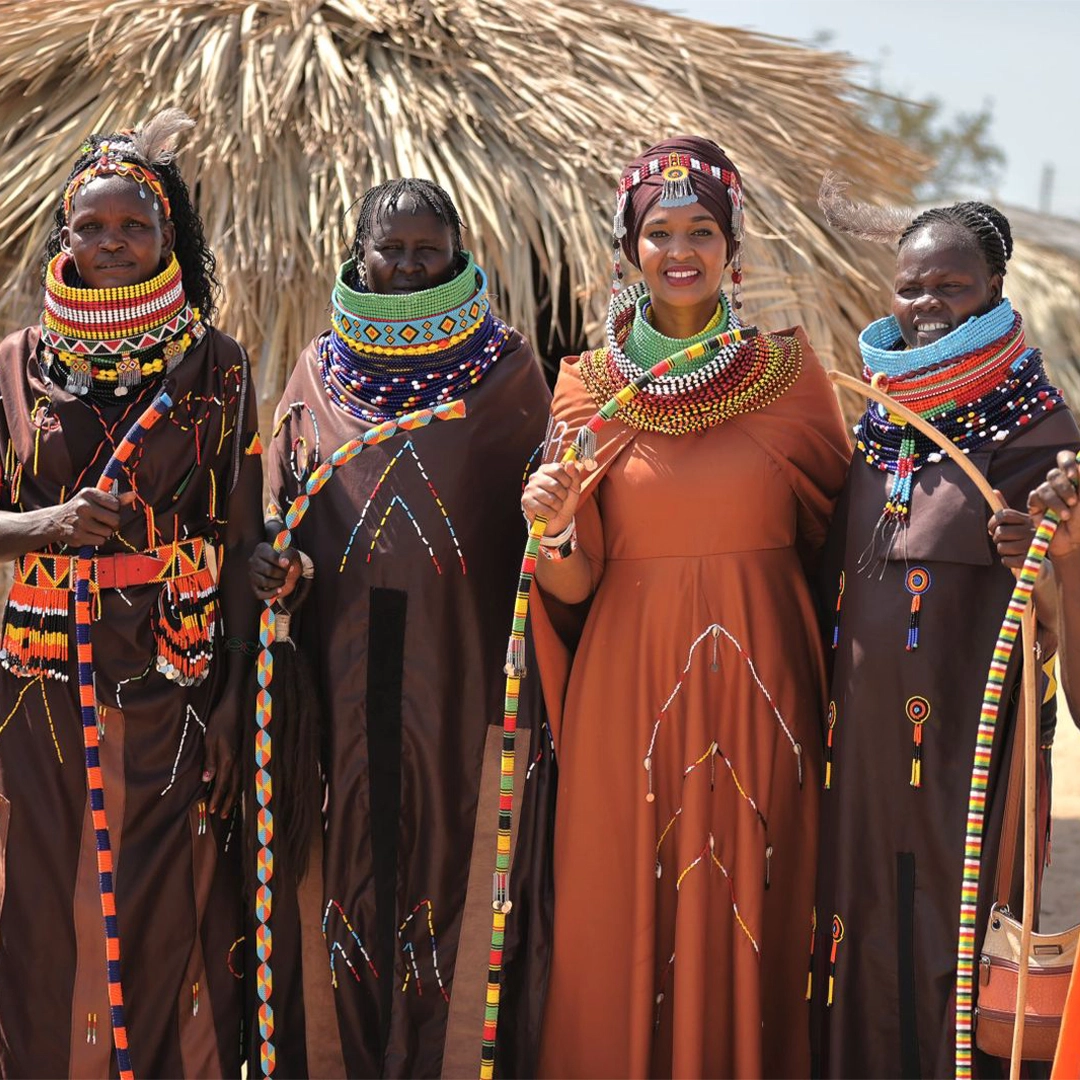
Long before international travelers discovered Samburu, local communities had developed a profound understanding of the region’s wildlife.
The Samburu people have lived alongside these animals for generations, adapting their lifestyles to the rhythms of the land.
Traditional knowledge includes an intimate awareness of animal behavior, migration patterns, seasonal changes, and ecological relationships.
This relationship is increasingly important in modern conservation efforts.
Many community conservancies surrounding Samburu National Reserve now play a vital role in wildlife protection.
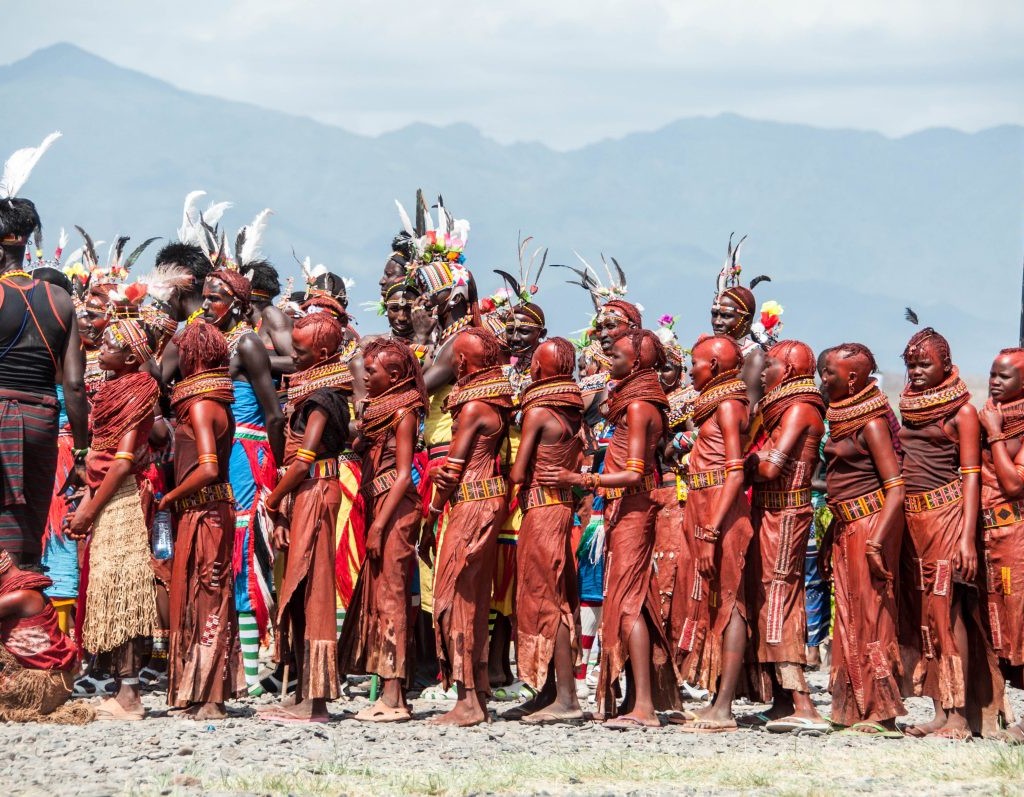
These conservancies create corridors that allow animals to move freely while generating income through responsible tourism.
Visitors who choose a Samburu safari are not only supporting wildlife conservation but also helping local communities benefit from protecting natural resources.
Community-led conservation has become one of Kenya’s greatest wildlife success stories.
By linking tourism, livelihoods, and conservation, these initiatives create incentives to preserve habitats for future generations.
Conservation Challenges Facing the Samburu Special Five
Despite their resilience, the Samburu Special Five face significant challenges.
Climate change remains one of the greatest threats.
Northern Kenya experiences recurring droughts that reduce water availability and impact vegetation growth. As drought periods become more frequent and severe, wildlife must compete for increasingly limited resources.
Habitat fragmentation presents another challenge.
Expanding human settlements, infrastructure development, and land-use changes can restrict traditional wildlife movements.
For species such as the Grevy’s zebra and reticulated giraffe, maintaining connected landscapes is essential for long-term survival.
Human-wildlife conflict also remains a concern in some areas.
When livestock and wildlife share resources during dry periods, competition can increase. However, innovative community-based conservation programs are helping reduce conflict while supporting both people and wildlife.
The encouraging news is that conservation organizations, government agencies, researchers, and local communities are working together to address these issues.
Monitoring programs, habitat restoration projects, anti-poaching initiatives, and community conservancies are helping protect populations across northern Kenya.
As a result, Samburu remains one of the most important conservation landscapes in East Africa.
Frequently Asked Questions About the Samburu Special Five
1. What are the Samburu Special Five?
The Samburu Special Five are five unique animal species commonly found in northern Kenya: the Grevy’s zebra, reticulated giraffe, gerenuk, Beisa oryx, and Somali ostrich. They are considered special because they are rarely seen together outside the Samburu ecosystem.
2. Where can I see the Samburu Special Five in Kenya?
The best place to see the Samburu Special Five is in Samburu National Reserve and neighboring conservancies such as Buffalo Springs National Reserve and Shaba National Reserve.
3. Why are the Samburu Special Five different from the Big Five?
The Big Five were originally classified based on hunting difficulty, while the Samburu Special Five are grouped because they are unique species associated with northern Kenya’s semi-arid ecosystems.
4. Is Samburu worth visiting compared to Maasai Mara?
Yes. Samburu offers unique wildlife, fewer crowds, dramatic landscapes, authentic cultural experiences, and the chance to see species not commonly found in the Maasai Mara.
Why the Samburu Special Five Belong on Every Safari Bucket List
In a country famous for lions, elephants, and the Great Migration, it would be easy to overlook the wildlife treasures of northern Kenya.
That would be a mistake.
The Samburu Special Five represent something increasingly rare in modern travel: discovery.
They are not simply iconic animals. They are symbols of adaptation, survival, and biodiversity. They tell the story of a landscape shaped by heat, drought, resilience, and evolution.
For those seeking a deeper, richer, and more authentic wildlife experience, Samburu offers something extraordinary. Contact Crystal Tours Kenya via email info@crystaltourskenya.com or call +254 727 039 513 for a special five safari.